

Becoming a parent is often described as one of life’s biggest milestones. While many people expect physical changes after pregnancy and childbirth, fewer anticipate the emotional, psychological, and identity shifts that can come with stepping into this new role. Alongside the joy, excitement, and love that many parents experience, it is also common to encounter uncertainty, grief for a previous version of yourself, overwhelm, or a feeling that your entire world has changed overnight. These experiences are part of a concept known as matrescence.
Although conversations about motherhood have become more open in recent years, many women still feel pressure to appear as though they have everything under control. Social media, cultural expectations, and well-meaning advice from others can create unrealistic standards of what motherhood “should” look like. Understanding matrescence can help normalize the wide range of emotions that may accompany becoming a mother.
What is matrescence?
The term matrescence was originally coined by medical anthropologist Dana Raphael in the mid-1970s to describe the process of becoming a mother. Similar to how adolescence describes the transition from childhood to adulthood, matrescence refers to the physical, emotional, psychological, social, and identity changes that can begin during pregnancy and continue throughout the transition to motherhood.
Because so many aspects of life change at the same time, matrescence can feel exciting one moment and overwhelming the next. New mothers may find themselves constantly adapting to new routines, responsibilities, and expectations while simultaneously learning about their baby’s needs and how to take care of their own.
Some of the transitions involved in matrescence include:
- Adjusting to a new identity as a mother
- Learning to care for a baby
- Navigating changing relationships with partners, family, and friends
- Balancing work, caregiving, and personal responsibilities
- Managing changing priorities and daily routines
- Processing new emotions that may feel unfamiliar or conflicting
It is important to note that matrescence is not a formal mental health condition or diagnosis. Instead, it describes a transition that may include a broad spectrum of emotional experiences. However, because this life transition involves significant change, some individuals may experience mental health conditions that benefit from professional evaluation and treatment.
It’s also important to note that although matrescence is most commonly discussed in relation to pregnancy and childbirth, some adoptive mothers and non-birth parents also describe identity shifts as they transition into parenthood.
The impact of matrescence
While each new parent’s experience is different, many find themselves adjusting to simultaneous physical, emotional, cognitive, and social changes. These changes can interact in ways that may influence overall mental well-being.
Physical changes
The postpartum period can bring enormous physical changes as the body recovers from pregnancy and childbirth. Hormone levels fluctuate rapidly after delivery, while sleep disruption, physical recovery, new caregiving responsibilities, and changes in daily routines can all influence well-being.
Depending on the pregnancy and birth experience, mothers may also be recovering from:
- Vaginal delivery or cesarean birth
- Breastfeeding challenges
- Pelvic floor recovery
- Fatigue and sleep deprivation
- Changes in appetite
- Ongoing physical discomfort
Some mothers may also find themselves struggling with changes in how they view their bodies. New mothers may experience complicate feelings about body image, confidence, or self-esteem.
Emotional and psychological changes
Motherhood can introduce emotions that feel surprisingly intense or unpredictable. It isn’t uncommon for new mothers to experience joy, gratitude, love, fear, anxiety, sadness, frustration, excitement, and exhaustion, sometimes all within the same day. Some women may experience the baby blues, which may involve tearfulness, mood swings, irritability, and feeling emotionally overwhelmed.
For some individuals, however, emotional difficulties become more severe or longer lasting. Maternal mental health conditions can include:
- Postpartum depression
- Postpartum anxiety
- Postpartum psychosis (a rare but serious psychiatric emergency requiring immediate medical evaluation and treatment)
These conditions extend beyond the adjustment process of matrescence and should be evaluated by a licensed, qualified healthcare professional. Early recognition and treatment can make a meaningful difference in recovery.
Changes in identity
Some women describe feeling as though they no longer recognize themselves or feel disconnected from the person they were before becoming a parent. Friendships, hobbies, routines, career goals, and priorities may all change after welcoming a child. Some mothers may feel torn between who they were before pregnancy and who they are becoming now.
Questions that may arise include:
- Who am I outside of being a mother?
- Will I ever feel like myself again?
- How do I balance my own needs with caring for my child?
Some women also carry much of the “mental load” of parenting. This invisible labor includes constantly planning, remembering appointments, anticipating needs, managing schedules, organizing household responsibilities, monitoring a child’s development, and making countless daily decisions. Carrying this ongoing cognitive responsibility can contribute to exhaustion, stress, and burnout.
Adjusting to new motherhood
Finding healthy ways to cope, regulate emotions, and make space for your own well-being can support your mental health throughout this transition. These strategies can help make difficult emotions feel more manageable.
1. Use breathing exercises during overwhelming moments
When stress begins to build, slowing your breathing may help regulate your body’s stress response.
One breathing technique that has received growing attention is the physiological sigh, which involves taking two quick inhales through the nose followed by one long, slow exhale through the mouth.
Other breathing exercises, such as diaphragmatic breathing or box breathing, may also help some people feel more grounded when emotions feel overwhelming.
2. Try grounding techniques
Grounding techniques can help redirect attention to the present moment during periods of stress or overwhelm.
Examples include:
- Holding an ice cube
- Naming five things you can see, four you can touch, three you can hear, two you can smell, and one you can taste
- Doing a body scan
These techniques may support emotional regulation and help interrupt spiraling thoughts.
3. Practice radical acceptance
Rather than approving of a difficult situation or giving up, radical acceptance involves acknowledging reality as it exists in the present moment. Research suggests that acceptance-based approaches can help reduce emotional distress by reducing energy that may have been used in fighting emotions in circumstances that cannot be immediately changed.
For example, a mother recovering from childbirth while navigating sleepless nights may find herself repeatedly thinking, “I shouldn’t be feeling this overwhelmed.” Radical acceptance invites a different perspective: recognizing that this season is difficult, that the emotions are real, and that difficult feelings can exist alongside love for a child.
4. Set healthy boundaries
New parents often receive an abundance of advice and expectations from others.
Setting boundaries may include:
- Limiting visitors during recovery
- Saying no to commitments that feel overwhelming
- Asking loved ones to check before stopping by
- Communicating specific ways others can help
- Protecting time for rest whenever possible
Boundaries can support emotional well-being by reducing unnecessary stress during an already demanding life transition.
How to help a new mother
Loved ones often want to help after a baby is born but aren’t always sure what would actually be helpful. While gifts and congratulations are often appreciated, practical and emotional support can make a lasting difference during matrescence.
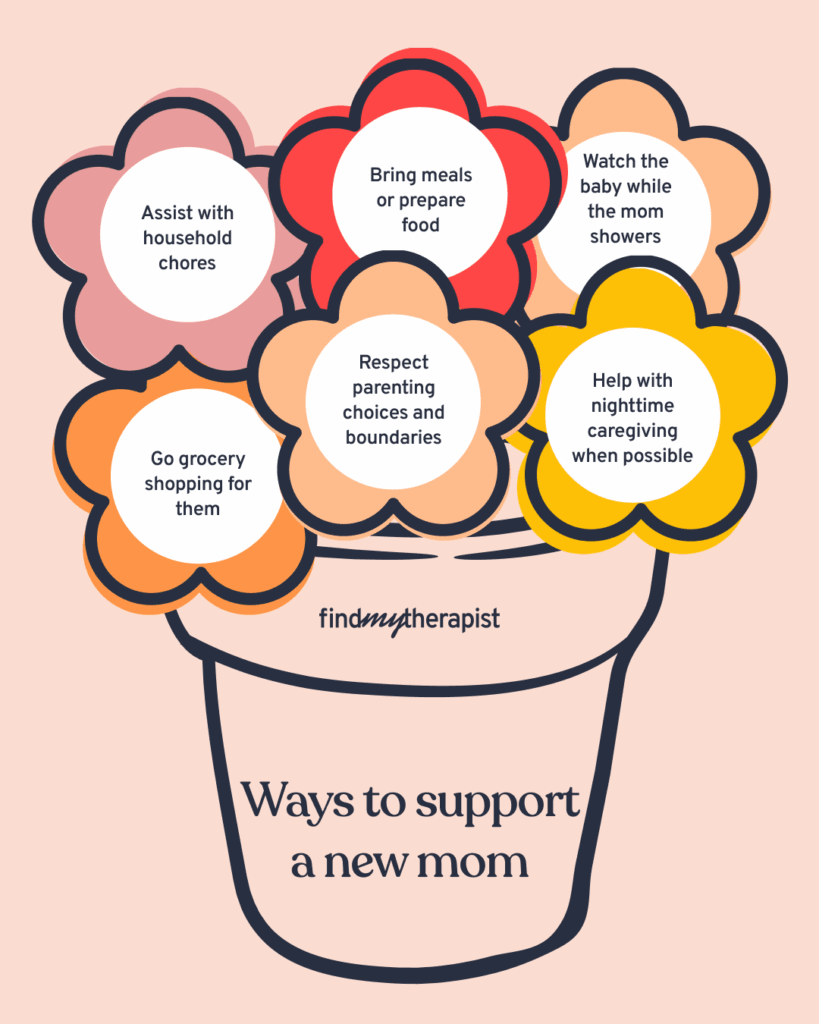
Ways family members and friends can provide support for mothers include:
- Bringing meals or preparing food
- Assisting with household chores such as laundry or dishes
- Watching the baby while the mom showers or takes a nap
- Running errands or going grocery shopping for them
- Respecting parenting choices and personal boundaries
Partners also play an important role during matrescence. Sharing household responsibilities, participating in nighttime caregiving when possible, encouraging rest, and openly communicating can help reduce the burden that mothers may be carrying.
Therapy for moms
Therapy can provide a supportive space to process the emotional, relational, and identity changes that often accompany becoming a parent.
For some mothers, therapy offers an opportunity to talk openly about experiences that may not feel comfortable discussing elsewhere. Others may seek therapy because they are struggling with stress, adjusting to major life changes, navigating relationship challenges, or experiencing symptoms of a postpartum mental health condition.
Therapy may help mothers:
- Process changes in identity
- Develop healthy coping skills for stress
- Navigate changing relationships
- Build emotional regulation skills
- Process difficult birth experiences
- Improve communication with partners, friends, or family members
Therapy can also provide a space to explore the emotions that may arise during matrescence without fear of judgment. New parents may find comfort in having dedicated time focused entirely on their own well-being.
Takeaway
Becoming a mother can feel like an ongoing process of physical recovery, emotional adjustment, evolving relationships, and discovering a new sense of identity. While every mother’s experience is unique, learning about matrescence can help normalize the wide range of emotions that may accompany new motherhood and encourage more compassionate conversations about maternal mental health.
Reaching out for support is a sign of strength, not failure. If you’re looking for support during this season of life, you can explore licensed therapists at findmytherapist.com to find a therapist who can support you through the transition into motherhood.