

Have you ever reached the end of a social gathering or workday feeling completely drained, even though everything seemed to go well on the surface? Maybe you spent the day carefully thinking through what to say, mentally reminding yourself to maintain eye contact, or trying not to draw attention to certain behaviors. For some people, this may align with the term “masking.”
While it’s normal for people to adjust their behavior depending on the situation from time to time, masking generally refers to a more persistent pattern of hiding, suppressing, or changing aspects of yourself to fit in, meet social expectations, or avoid negative reactions from others. In recent years, masking has become more widely discussed in conversations surrounding neurodivergence, particularly autism and ADHD. Understanding what masking may look like, why it can happen, and how it can affect mental health can help people better understand themselves and decide whether additional support, such as therapy, may be helpful.
What is masking?
Masking, sometimes called camouflaging or compensating, refers to consciously or unconsciously hiding, suppressing, or changing certain behaviors or emotions to better blend into social environments. The goal is often to conform to social expectations or avoid standing out. In fact, a 2026 survey found that 91.6% of adults with ADHD reported camouflaging behaviors to fit in or avoid negative social experiences.
The concept is most commonly discussed in relation to autism and ADHD, although people experiencing anxiety, trauma, or other mental health challenges may also describe masking behaviors in certain situations. Researchers have described masking as a collection of camouflaging behaviors that can have positive impacts and help individuals appear more socially typical (or “neurotypical”), even when doing so requires significant mental effort. These behaviors may develop over many years as people learn what behaviors are socially acceptable or expected.
For some individuals, masking begins during childhood after receiving messages, either directly or indirectly, that certain behaviors are “too much,” “weird,” or socially unacceptable. Others may develop masking strategies later in life after repeated instances of misunderstanding, criticism, bullying, or exclusion.
Masking is not always intentional. Some people may describe it as becoming second nature after a long time of adapting to social expectations. These individuals may find themselves automatically changing how they speak, move, express emotions, or interact with others depending on the situation.
Signs and examples of masking
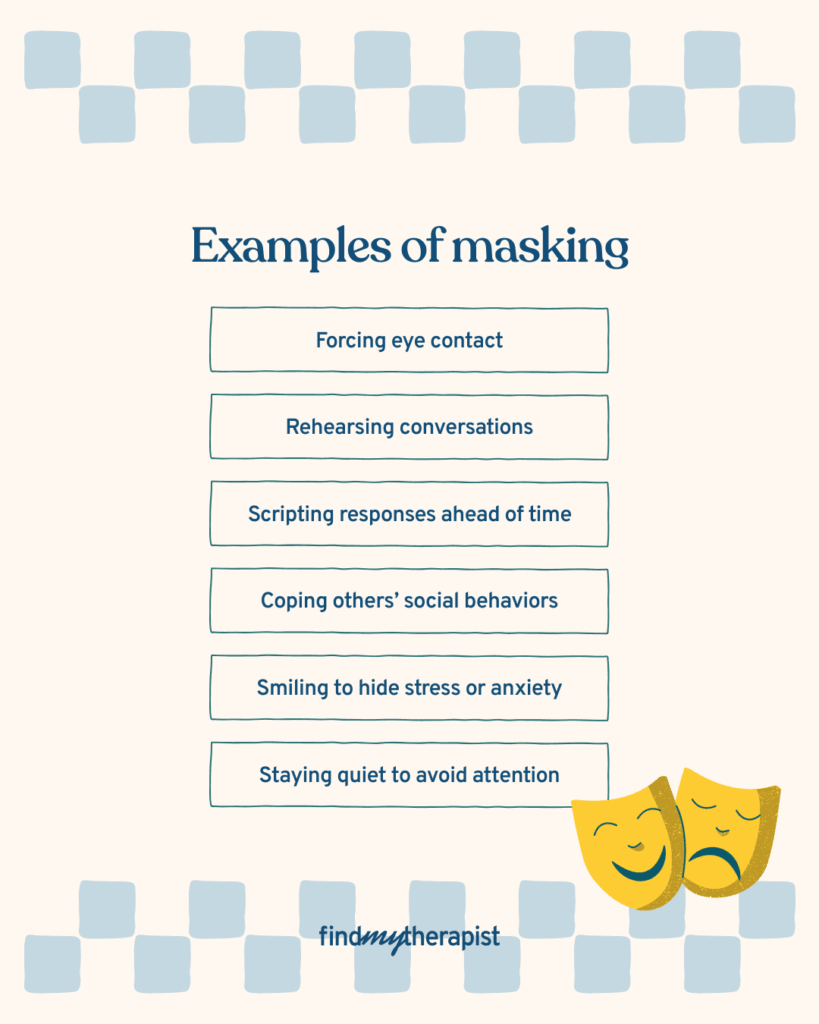
Masking can look different from person to person. Some examples of masking include:
- Forcing eye contact even when it feels uncomfortable
- Memorizing social rules or conversations before entering social situations
- Rehearsing conversations or scripting responses ahead of time
- Mimicking another person’s facial expressions, gestures, or tone of voice
- Hiding or suppressing stimming behaviors, such as fidgeting or rocking
- Sitting still despite an urge for movement
- Smiling even when it doesn’t match how they actually feel
- Over-preparing for meetings, presentations, or social events to reduce uncertainty
- Carefully monitoring how they speak, dress, or behave to avoid appearing “different”
For some individuals, masking may also involve becoming highly attentive to the reactions of others. They may constantly monitor conversations for signs that they’ve said the wrong thing or worry about making mistakes that could lead to embarrassment or criticism. Over time, this heightened awareness can become mentally exhausting.
Why do people mask?
People may mask for many different reasons, including:
- Wanting to fit in
- Trying to avoid bullying or discrimination
- Navigating workplace or school expectations
- Reducing unwanted attention
- Avoiding conflict
- Managing a fear of rejection
- Feeling pressure to please others
Research also suggests that females with autism may be more likely to engage in masking behaviors, which may contribute to later recognition or diagnosis for some individuals. However, masking can occur across all genders and age groups.
Consequences of masking
Although masking may help someone navigate certain social situations or avoid negative experiences in the short term, maintaining these efforts over long periods can come at a significant emotional cost.
One of the most commonly reported consequences is exhaustion or burnout. Constantly monitoring facial expressions, body language, tone of voice, conversations, and emotional reactions requires ongoing mental and social energy.
Masking can also affect a person’s sense of identity. If someone spends years adapting themselves to meet the expectations of others, they may begin to wonder which behaviors genuinely reflect who they are versus which ones they’ve learned to perform. This uncertainty can create feelings of confusion or disconnection from one’s authentic self.
In addition, masking can sometimes delay recognition that additional support may be helpful. Since someone who is masking may appear to be functioning well externally, friends, family members, educators, healthcare professionals, or even the individual themselves may not realize how much effort is being expended behind the scenes.
Coping with the challenges of masking
If masking has become a significant source of stress or burnout, some strategies may help increase self-awareness and reduce emotional strain.
1. Notice when masking is happening
Often, the first step is simply recognizing the behavior.
Keeping a journal or reflecting after different social situations may help identify patterns. Some people may notice that they mask more in certain situations or around certain people.
Questions that may be helpful to reflect on include:
- When do I feel most like myself?
- When do I feel like I’m performing or carefully monitoring my behavior?
- Which situations leave me feeling energized?
- Which interactions leave me feeling emotionally or physically exhausted?
Developing this awareness can provide valuable insight into the situations that require a great amount of effort.
2. Practice small moments of authenticity
Some people use the term “micro-unmasking” to describe making small, intentional choices to express themselves more naturally.
This might involve:
- Allowing yourself to speak more naturally instead of rehearsing every sentence
- Taking short breaks
- Allowing yourself to engage in behaviors such as stimming or fidgeting in environments where you feel safe and comfortable
- Being honest when you’re mentally fatigued
These small actions may help reduce the pressure of constantly monitoring every interaction while still honoring personal comfort and safety.
3. Scheduling time to recharge
Even when masking feels necessary, it’s important to remember that rest and recovery time are important.
Some people find that intentionally scheduling quiet time after social interactions allows their minds and bodies an opportunity to decompress. This might include having alone time, engaging in creative hobbies, limiting additional commitments, or participating in activities that feel restorative for you.
4. Build supportive relationships
Feeling accepted by even a small number of trusted people can make a meaningful difference.
Supportive relationships may provide opportunities to communicate more openly without feeling the need to constantly monitor every word, facial expression, or behavior. Over time, experiences of acceptance may help reduce the pressure to maintain a mask in every environment.
How therapy can be supportive
A therapist can help individuals look at the experiences that may have contributed to masking, including feelings of shame, pressure to fit in, or fears about being accepted by others. Through this process, people may begin to better understand which behaviors feel authentic and which may have developed as a protective strategy.
Therapy may also help people:
- Identify situations where masking is most common
- Recognize signs of stress or burnout
- Develop healthier coping skills for navigating social situations
- Build self-acceptance and confidence in expressing their authentic selves
- Practice setting boundaries in relationships and environments that contribute to stress
For individuals who have autism, ADHD, or AuDHD, working with a therapist who takes a neurodiversity-affirming approach may be especially beneficial. These approaches often focus on understanding individual strengths, reducing unnecessary distress, and supporting overall well-being.
Takeaway
Masking can be an invisible experience. While someone may appear calm or confident on the outside, they may be investing an enormous amount of mental and emotional energy into managing conversations and behaviors. Over time, that effort can become draining and may affect overall mental health.
If masking has left you feeling emotionally drained or disconnected from yourself, speaking with a licensed therapist may help you better understand your experiences and explore what authentic self-expression looks like for you. At findmytherapist.com, you can browse therapists based on your preferences, learn about their approaches, and schedule an appointment online when you’re ready.